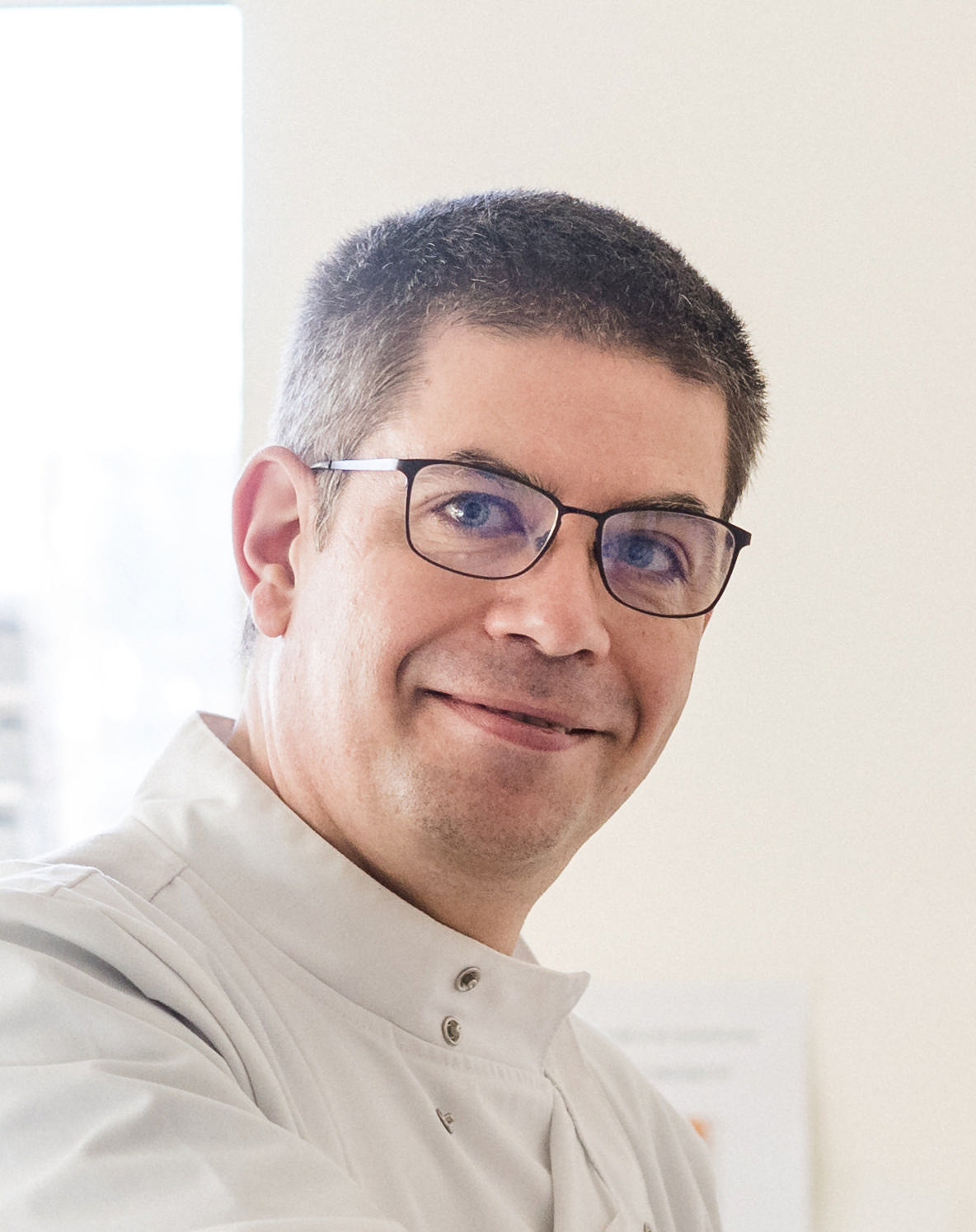
Professor Guillaume Hautbergue is an RNA biologist investigating the molecular mechanisms of gene expression in neurodegeneration for the development of novel gene therapies and RNA therapeutics. in 1990, he was awarded the First National Prize in Biochemistry for France and French Overseas Countries in the competitive secondary school examination “Concours Général”.
He further obtained a Senior Technologist’s Certificate and a MSc degree in Biochemistry prior to undertaking a PhD in Molecular and Cellular Biology at “Ecole Normale Supérieure” and “Commissariat à l’Energie Atomique” in Paris. His PhD research pioneered the investigation of a non-cyclic cyclin-dependent kinase involved in the regulation of transcription by the RNA polymerase II. He then moved to the Universities of Manchester (UMIST) and Sheffield for his post-doctoral studies, which established the structural and molecular basis for the roles of nuclear export adaptors in the transport of human mRNAs from the nucleus to the cytoplasm.
He was appointed to a tenured position in the Sheffield Institute for Translational Neuroscience in 2015 for the identification and manipulation of altered RNA alterations in neurodegenerative diseases, focusing on amyotrophic lateral sclerosis/ frontotemporal dementia (ALS/FTD). He has particular interest in the genome-wide identification of disease-altered gene expression (transcriptomes & translatomes) and in the characterisation of RNA nuclear export factors and repeat-associated non-AUG (RAN) translation.
A programme of promising gene therapy approaches targeting the nuclear export of pathological C9ORF72 repeat transcripts in the most commonly known genetic cause of ALS/FTD led to several pending and granted patents for the use of SRSF1 antagonists in the treatment of neurodegenerative disorders. He is also the Founding Director and Chief Scientific Officer of Crucible Therapeutics, a University of Sheffield spinout company which aims to bring advanced therapeutic medicinal products into clinical trials. In 2019, he was invited and elected Fellow of the Royal Society of Biology (FRSB).