Biography: I am a pharmacy student at University College London with a strong interest in…
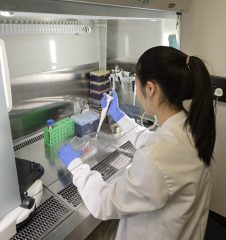
Researcher Spotlight – Casey Teo
Biography:
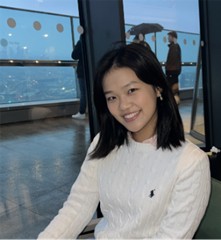
Casey is a 4th year MSci Biochemistry (Molecular Biology) with a Year in Industry student at University College London (UCL). She completed her URB project with Dr. Amanda Carr and Ana Alonso-Carriazo Fernandez at the UCL Institute of Ophthalmology. She is currently undertaking a placement year as an Associate Clinical Development Scientist in Clinical Operations at GSK. She aspires to advance stem cell–based therapies and disease modelling methods to improve drug design and development pipelines, ultimately enhancing patient outcomes.
Plans for the future:
Late-onset retinal degeneration (L-ORD) is a rare inherited eye disease that leads to vision loss. It primarily affects the retinal pigment epithelium (RPE), a layer of cells at the back of the eye that support the survival and maintenance of light-sensing retinal cells by supplying nutrients and removing waste products. As L-ORD progresses, the RPE breaks down and the light-sensing cells die, causing vision loss.
Currently, there is no cure for L-ORD. Thus, this project aimed to test the effects of a novel therapy, using a gene editing tool called CRISPR to fix the faulty gene that causes L-ORD. To test the effectiveness of this therapy, skin cells from L-ORD patients had been turned into induced pluripotent stem cells (iPSCs) in the lab previously. Since iPSCs can become any type of cell in the body, they were transformed into RPE cells to create a L-ORD disease model in a dish.
In this study, the efficiency of iPSC-RPE production from iPSCs, iPSC-RPE function, and gene expression were compared between healthy cells, patient cells, and CRISPR-edited patient cells. Although some findings differed from published studies, the CRISPR-edited cells consistently behaved more like healthy cells than unedited patient cells, suggesting the gene editing approach may help restore normal function. The next steps of this investigation would be to repeat these experiments with more samples and broaden the tests to include additional measures of cell health and function.
What got you interested in gene and/or cell therapy?
My interest in gene and cell therapy began as an A-level student. During this time, I shadowed a pharmacology professor conducting preclinical studies of antihypertensive drugs on mouse models. Seeing the limitations of animal models in translating preclinical success to human trials inspired me to explore alternative approaches. After listening to a stem cell lecture by Dr. Amanda Carr, we discussed her research using induced pluripotent stem cells (iPSCs) and CRISPR-based gene editing techniques, enabling the creation of patient-specific disease models that more accurately reflect human biology and hold the potential for one-off therapies targeting diseases at their root causes. In addition, attending the 2023 Advanced Therapies Congress in London and interviewing cell and gene therapy experts to explore the ethical dimensions of the field deepened my understanding of the large-scale manufacturing, quality control, regulatory, and ethical challenges involved in bringing stem cell–derived therapies to the clinic. Collectively, these experiences have strengthened my passion for gene and cell therapy and inspired me to contribute to advancing stem cell and genetic editing technologies.
What findings or opportunities in the field are you most excited about?
I am especially excited about the increasing refinement of genetic editing technologies that are improving both precision and safety, including advancements in base and prime editors as well as delivery vehicles for CRISPR machinery. It is incredibly inspiring to see how these innovations have progressed from preclinical studies to clinical trials and, in some cases, to recent regulatory approvals, moving a step closer to being delivered to patients. The recent FDA approval of a personalised in vivo CRISPR therapy marks a major milestone for precision medicine and demonstrates how far the field has come in translating groundbreaking science into real-world treatments. It is an exceptionally exciting time to be involved in this area, and I am eager to see how these breakthroughs will continue to evolve and reshape the future of healthcare.
What challenges did you face to get where you are now?
One of the biggest challenges I have faced has been maintaining resilience in the face of setbacks and moments of self-doubt, particularly during rejected applications and unsuccessful experiments. During these times, the support and encouragement I received from experienced mentors and professionals in the field were instrumental in helping me stay motivated and continue moving forward. Being part of a community of passionate, dedicated individuals driving innovation in gene and cell therapy has been incredibly inspiring, and constantly reminds me of the importance of perseverance and maintaining a positive mindset, qualities that continue to shape my approach to both research and professional development.
What is the most important thing you learned during your URB?
The most important thing I learned during my URB was the value of maintaining a positive and resilient mindset. Research often involves unexpected setbacks, and experiments do not always go as planned. I learned to approach every experience as a learning opportunity, drawing lessons not only from successes but especially from failures. Rather than becoming discouraged when results didn’t meet expectations, I tried to focus on understanding the underlying issues and finding ways to address them to make progress. This mindset has shown me that setbacks are an essential part of scientific growth and has strengthened my problem-solving skills, adaptability, and persistence in the lab.
How has being part of the BSGCT community supported your career?
Being part of the BSGCT community has been invaluable, providing me with access to cutting-edge research and a unique opportunity for both personal and professional growth through the URB. Undertaking independent research with incredible support allowed me to deepen my technical expertise, develop problem-solving skills, and gain confidence in handling complex practical techniques. Preparing my report refined my scientific writing and analytical abilities, while also enhancing my skills in communicating complex research to a broader audience, making science more accessible to the public. This experience broadened my perspective on the translational potential of stem cell research and reinforced my commitment to advancing this field. Overall, it was a formative and highly rewarding experience, and I am extremely grateful for the opportunity.
Related Posts