BSGCT travel grant to fund attendance at the 16th International Adenovirus Meeting, Caerdydd, 2025 Luned…
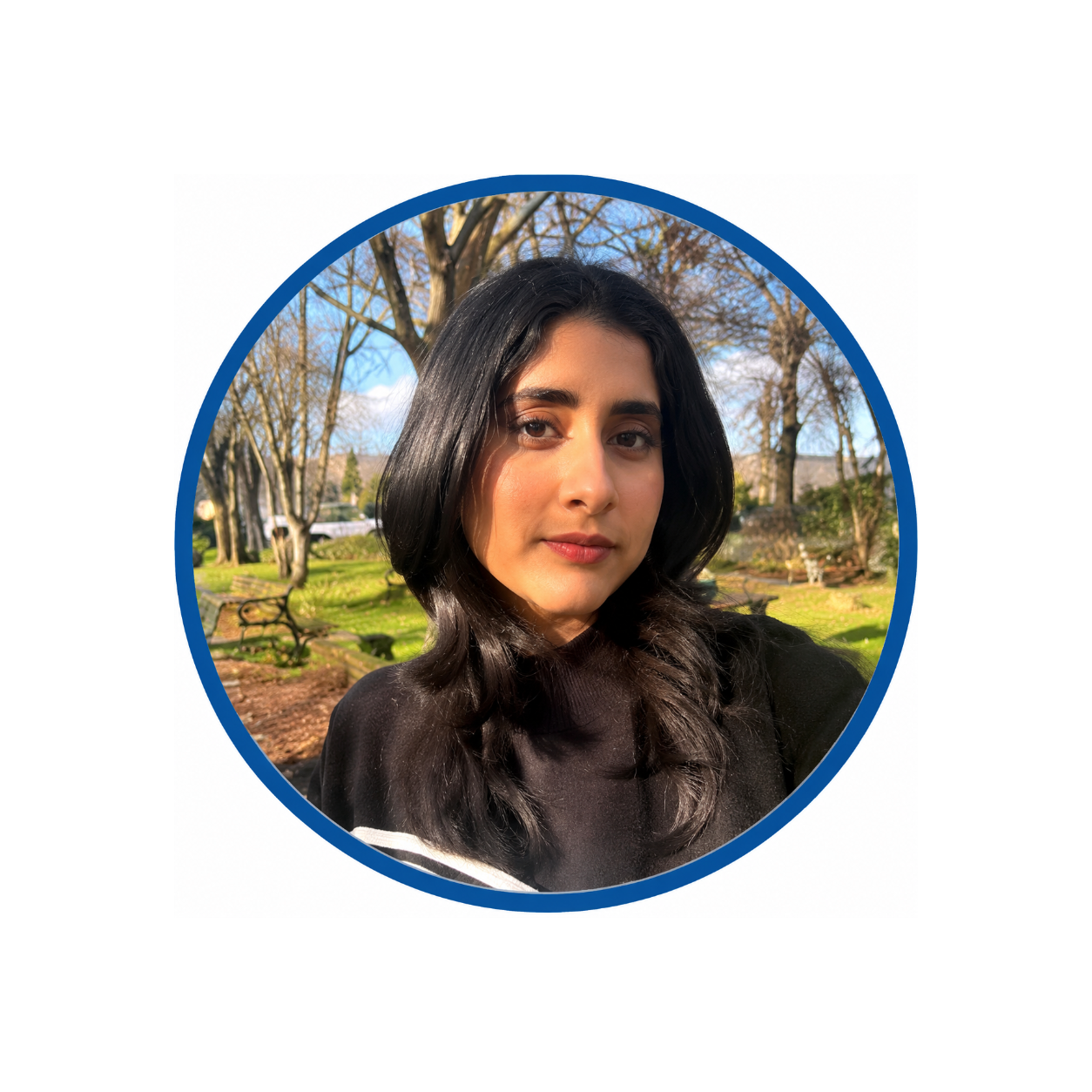
Researcher Spotlight – Asiya Fatima
Biography:
I am an MSc graduate in Stem Cells and Regenerative Medicine, with research experience focused on the interface between cellular biology and disease processes. My MSc research investigated the influence of the Parkinson’s protein, α-synuclein on platelet function in healthy volunteers to better understand thrombotic risks in Parkinson’s disease, combining molecular investigation with clinically relevant questions.
Alongside laboratory research, I am passionate about scientific communication as a means of translating complex biomedical concepts into meaningful patient-focused discussions, reflected in being named a runner-up in the BSGCT Scientific Writing Competition 2026. My scientific interests are driven by a commitment to understanding disease mechanisms, improving therapeutic strategies, and contributing to research that bridges bench science with real-world clinical impact. I aspire to grow as a scientist in collaborative research environments where curiosity, precision, and innovation can help advance treatments for complex and currently unmet medical challenges.
What got you interested in this field of research?
My interest in this field came from wanting to understand disease beyond what is immediately visible.
During my studies, I became increasingly interested in how underlying molecular and cellular mechanisms can shape much wider physiological consequences, particularly in diseases where there are still major gaps in understanding. I found myself drawn to the process of asking why certain biological changes happen, how they contribute to disease progression, and where deeper investigation could lead to more meaningful scientific and clinical insight.
This became more tangible during my MSc, where I had the opportunity to explore research in a way that moved beyond theory. Investigating the influence of α-synuclein on platelet function in relation to thrombotic risk in Parkinson’s disease introduced me to the complexity of disease mechanisms outside of conventional expectations. Parkinson’s is often primarily understood through its neurological symptoms, but looking at potential systemic implications emphasised how interconnected biological systems are, and how important it is to investigate less obvious contributors to disease risk. That experience deepened my interest in translational research, particularly where scientific questions have broader clinical relevance.
More broadly, I am drawn to this field because it combines scientific curiosity with the possibility of contributing to something larger than individual experiments. I value research for its ability to uncover new understanding, challenge assumptions, and gradually improve how complex diseases are approached.
What is the motivation behind your research/work?
My motivation comes from wanting to contribute to research that improves understanding in areas where disease burden is high, but scientific or clinical gaps remain significant. I am especially motivated by work that does not simply describe disease, but seeks to better understand mechanisms, risks, and opportunities for earlier or more precise intervention. For me, this is where research becomes most meaningful – when it has the potential to inform better questions, better strategies, or better outcomes.
This perspective was reinforced not only through my MSc project, but also through scientific writing. Writing about spinal muscular atrophy for the BSGCT Scientific Writing Competition pushed me to think critically about how scientific progress is often shaped not just by innovation itself, but by timing and application. In SMA, the difference between intervention at one stage versus another can fundamentally alter outcomes, which showed how scientific breakthroughs are often only as powerful as their delivery. This strengthened my appreciation for translational medicine and for research that considers both discovery and practical impact.
What is the most important thing you have learned working in this field?
The most important thing I have learned is that research is rarely linear, and meaningful progress often depends on how well you adapt to complexity rather than how closely results match expectations. Working in this field has taught me that science is not simply about generating data, but about interpreting uncertainty, recognising limitations, and understanding that unexpected findings can sometimes be as valuable as anticipated ones.
Through my research, I learned that even narrowly focused questions can reveal wider biological complexity, and that good research requires patience, precision, and the willingness to think critically about what results actually mean rather than what you hoped they would show. It also reinforced that technical knowledge alone is not enough; scientific progress depends heavily on asking relevant questions, refining approaches, and remaining open to learning throughout the process.
I have also come to understand how important communication and collaboration are within research.
Science is strengthened by the ability to exchange ideas, challenge thinking, and place individual findings into a broader context. Perhaps most importantly, working in this field has taught me humility – recognising how much remains unknown, while staying motivated to contribute carefully and meaningfully to that larger body of knowledge. That mindset has shaped both how I approach research now and how I hope to continue developing in the future.
What made you decide to get involved with the BSGCT?
I got involved with BSGCT because I wanted to engage more actively with the wider gene and cell therapy community and understand how research in the field develops beyond individual projects and institutions.
My involvement with BSGCT began when I joined the Early Career Development Subcommittee (ECDC) in August last year, which gave me the opportunity to contribute to discussions around supporting early-career researchers and engaging with the broader scientific community.
Alongside this, participating in the Scientific Writing Competition 2026 was a valuable experience in itself, particularly in refining how I approach scientific communication for a broader audience.
Overall, BSGCT has provided a meaningful way for me to stay engaged with current developments in gene and cell therapy; while also helping me build a better understanding of how collaborative and interdisciplinary the field is in practice.
Related Posts